The Blueprint Of the Blueprint: How Pre-Construction Thinking Saves Millions
In large, fast-paced projects, attention naturally gravitates to the visible, tangible aspects, such as construction progress, site activity, and speed. But behind that visible momentum is another layer of decision-making that rarely gets seen. Before any work begins on site is a phase where drawings are reviewed, details are aligned, materials are evaluated, and timelines are tested against real conditions. It is a stage where the project is not yet built, but many of its outcomes are already being shaped.
At Concept Consilio, this stage is approached as a preliminary step where design intent begins to translate into a physical reality that can be executed with clarity. Because while construction makes progress visible, it is this early thinking that often determines how smooth that progress will be.
From Drawings to Decisions
A well-resolved design does not always guarantee a smooth execution. Once drawings are tested against site conditions, services, materials, and sequencing, new layers of complexity may begin to emerge. What looks aligned on paper can shift when everything comes together. Services compete for space, timelines tighten, and details become harder to execute than they first appeared. Addressing these early allows decisions to stay flexible; otherwise, they tend to surface later when every change is more difficult and more expensive.
What Starts to Slip Early On
Many of the challenges that appear during construction can be traced back to small gaps that existed earlier but were not fully resolved. These could be coordination mismatches between services, details that are visually clean but complex to execute, or material selections that do not align with lead times and availability. Individually, they may not seem significant. But once construction begins, they start to overlap.
What might have been a simple adjustment on paper becomes a site-level correction involving time, cost, and coordination across multiple teams. This is where projects begin to feel reactive rather than controlled. Recognising these patterns early prevents them from escalating.
Where Early Thinking Adds Real Value
Pre-construction is often seen as a review phase, but in many ways, it’s where the project becomes more practical. Simplifying details, aligning materials with availability, and planning work in a way that avoids clashes on site are small decisions with a large impact on execution. When this is done well, work moves more smoothly. There are fewer interruptions, and less need to go back and fix things.
Resolving What the Drawings Didn’t Show
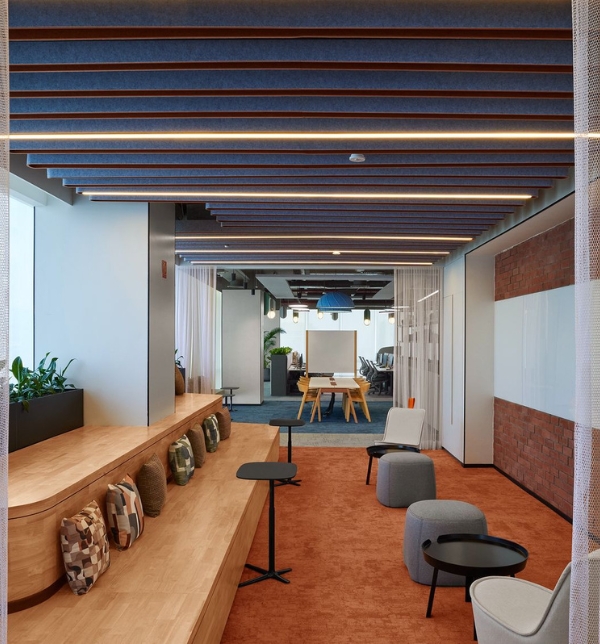
During one corporate fit-out project, the ceiling design appeared to be resolved at the drawing stage. But during coordination, HVAC ducts, sprinklers, and lighting were all competing for the same limited space. This issue was resolved early by reworking service routes and aligning everything before execution began, avoiding weeks of delay and cost overruns.
In another project, imported glass partitions were specified, but their lead time didn’t align with the schedule. By identifying this early, alternatives were explored, approvals were fast-tracked, and installation was planned in phases, keeping the project on track without compromising the design.
What Early Clarity Changes
Material choices, sequencing, and coordination may seem like unrelated decisions, but they all come together during execution. When they are thought through early, projects tend to move faster, with fewer disruptions. Costs stay more controlled because rework is reduced, and the outcome is cleaner because fewer compromises are made along the way. More importantly, the project feels easier to manage. There are fewer surprises, and decisions are not being made under pressure.
Pre-construction does not change what a project looks like in the end. It simply changes how it gets built. It allows decisions to be made when there is still room to adjust them, instead of dealing with them later at a much higher cost. In most cases, the difference between a smooth project and a difficult one comes down to how much was resolved before work even began.